
LinkedIn — 8 min
LinkedIn carousel: turn one idea into 2 to 10 coherent slides
The carousel format works when every page has a job: hook, explain, prove, show and move the reader forward. My Post Factory automates that split so the result feels like a logical sequence, not a long post pasted across several slides.
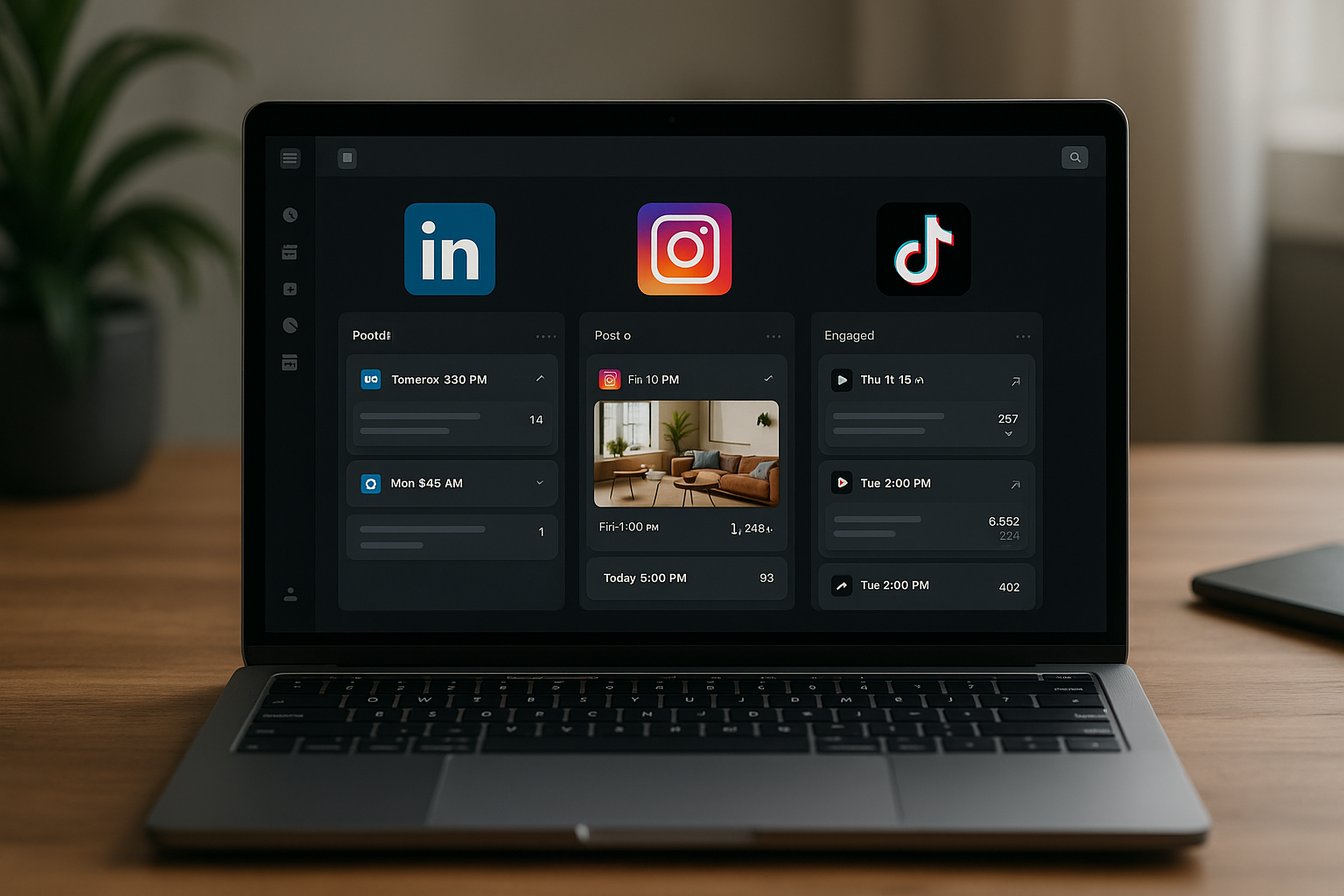
- Targets important searches around LinkedIn carousel, LinkedIn carousel post and social media carousel.
- Explains how to turn a generated post into a readable 2 to 10 slide sequence.
- Connects carousel creation with branding images, one product per slide and My Post Factory automation.
Why the LinkedIn carousel is a strategic format
On LinkedIn, a carousel creates an active reading moment. The user does not only see a hook in the feed: they move from one slide to the next, which gives you more room to develop an idea without publishing a heavy wall of text.
The format is especially useful for educational posts, frameworks, comparisons, short guides, product demos and authority content. It shows how the thinking is structured, not only the conclusion.
The hard part is the architecture. A useful LinkedIn carousel needs a strong opening, a natural progression and an ending that makes the reader want to act or comment.
A LinkedIn carousel works when it creates progression, not when it turns a long post into decorated screenshots.
The right logic for 2 to 10 slides
My Post Factory currently keeps the format between 2 and 5 pages because that range is simple to produce, review and publish regularly. Two slides work for a simple before/after or contrast. Three slides can cover problem, method and result. Four or five slides give more space for a short guide or demonstration.
The AI starts from the generated post, identifies the main ideas and splits them into slides with a clear role. One slide can hook, another can add context, another can prove the point, another can show the method, and the last one can close with a CTA.
That prevents a common LinkedIn carousel problem: repeating the same idea several times just to fill the pages.
- 2 slides for a clear contrast or direct promise
- 3 slides for problem, solution, result
- 4 slides for a mini-framework or demo
- 5 slides for a short guide with a final CTA
How My Post Factory generates the carousel
Inside an automation, you choose carousel mode and the number of pages. The system first generates the substance of the post, then transforms it into a slide plan. The goal is to preserve the core idea while making every page readable on its own.
The text is shortened, structured and distributed so the flow stays clear. The slides are not paragraphs placed over images: they follow a presentation logic, with one clear piece of information per screen.
The format then fits the same workflow as the rest of the product: generation, optional review, regeneration of a specific page if needed, then publishing on the selected network.
The key is not only creating five images. It is turning one idea into an editorial sequence.
Branding images and one product per slide
A LinkedIn carousel can stay editorial, but it becomes stronger when it uses real visual references. My Post Factory lets you add images to guide branding, define a visual universe or showcase a product.
For brand content, reference images help keep the art direction coherent: colors, mood, finish and composition style. For product content, you can use one image per page so each slide highlights a different item, offer or use case.
That is useful for brands, SaaS companies, consultants and e-commerce teams that want more than a text post with a generic image.
When to use a carousel instead of a simple post
A LinkedIn carousel is relevant when the idea needs to unfold. If the message fits in a short opinion or one sentence, a simple post is enough. If the content explains a method, compares options or shows a transformation, a carousel is a better fit.
It is also useful when you want to reuse denser material: an offer page, FAQ, article, product demo, analysis or customer story. The format gives that material a second life without rewriting everything manually.
The best approach is to alternate. Not every post should be a carousel, but a few well-structured carousels inside an editorial system add variety and depth to the account.
The carousel is not a visual gimmick. It is a format for teaching, proof and structured thinking.
The real operational gain
Creating a carousel manually takes time: choosing the angle, writing slide titles, splitting the content, producing visuals, checking consistency and adapting it to the network. That cost is why many teams rarely publish them.
With My Post Factory, the carousel becomes a regular format instead of a one-off production effort. You keep the strategic framing, while the repetitive production work is handled by the automation.
That is what makes the format sustainable for LinkedIn: less dependence on weekly inspiration, more ability to publish structured content consistently.
Create LinkedIn carousels without starting from scratch
The format becomes truly useful when it can be produced regularly with a real editorial logic, not only on the weeks when someone has time to design five slides.