Instagram — 8 min
Instagram automation: keep the account alive without spending your week on it
When Instagram depends on motivation alone, the account usually slows down. What teams need is a simple system for preparing, validating and publishing without rebuilding everything from scratch each time.
- Explains how to maintain a credible Instagram rhythm without overloading a small team.
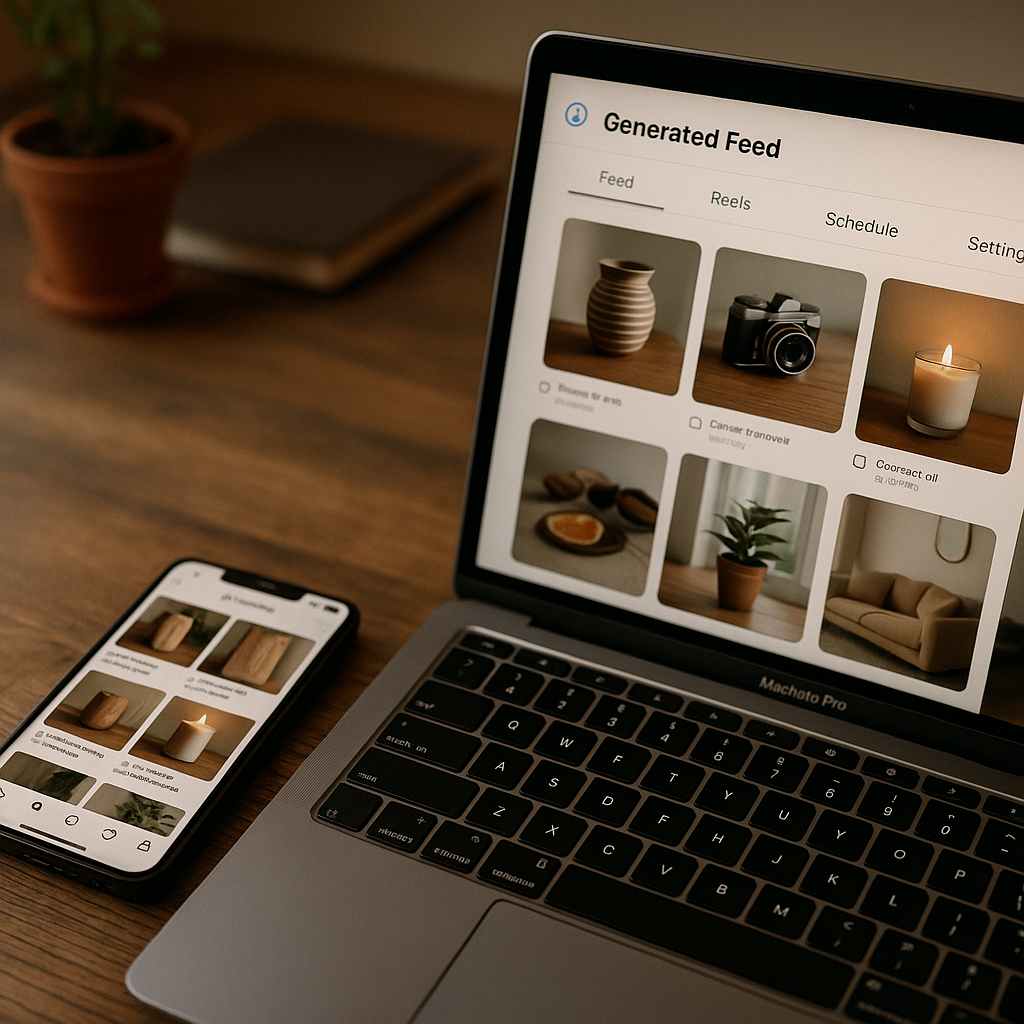
- Shows how My Post Factory combines content generation, media and publishing in one flow.
- Connects the topic to concrete needs such as views, products, consistency and visual identity.
Why Instagram is exhausting for small teams
Instagram demands repeated effort. Visuals have to be good enough, captions have to sound natural, product angles need refreshing and the account still needs a steady rhythm.
In a small company, this work gets squeezed between sales, operations and customer support. The account stays active for a while, then output drops. Not because there is nothing to say, but because turning ideas into finished posts takes too much effort over time.
Automation becomes useful when it reduces that production cost. Not only the final scheduling step, but the work of preparing, shaping and repeating content.
What people really want when they look for Instagram automation
Most users are not looking for a magic button. They want to avoid an empty calendar, last-minute visuals and long periods where nothing gets published.
They also want the account to still feel like their brand. Automation is only valuable when the output remains publishable and recognisable.
That is why the right page needs to talk about workload, visual consistency, asset reuse and sustainable cadence instead of vague automation promises.
- Produce faster from existing assets
- Stay consistent without relying on inspiration
- Showcase products without rebuilding the workflow manually
- Keep visual identity coherent from post to post
- Reduce the weekly content debt that keeps accumulating
On Instagram, the real promise is not automatic posting. It is staying active without exhausting the team.
Where My Post Factory makes a real difference
My Post Factory is not only a calendar. It works from practical inputs such as business description, offers, existing visuals, references, catalogues and tone guidance. From that base, it can generate content, prepare or enrich media and then publish on a planned cadence.
That changes the daily experience for brands and solo operators. The hard question is rarely just when to publish. It is how to keep the content pipeline filled without repeating the same painful process every week.
On Instagram, that difference becomes obvious when the account needs to mix product posts, presence posts, campaign content and more visual storytelling. My Post Factory becomes more relevant as soon as the friction starts before scheduling.
Use cases where My Post Factory becomes relevant
A common case is a brand that already has visuals, a catalogue or some references but cannot sustain output. My Post Factory helps turn that material into several usable publications instead of leaving those assets unused.
Another case is a small team that wants to keep showcasing products or work without dedicating a full day every week to content. The product helps prepare the material, keep the tone consistent and publish on a stable rhythm.
It is also relevant for brands that want to increase volume without falling into interchangeable filler content. In that scenario, references, existing media and upstream framing matter far more than simple scheduling.
When a simpler tool may be enough
If all content is already prepared elsewhere and the only challenge is placing posts into a calendar, a simpler scheduling tool may be enough.
My Post Factory becomes more valuable when the main pain point is production itself: writing, visual preparation, consistency and maintaining the rhythm over time.
So the real comparison is not simple versus complex. It is a scheduler versus a tool that removes a larger share of the actual work.
If timing is the only problem, MPF is broader than you need. If the real problem is keeping the account filled, the fit becomes much stronger.
What matters for a real Instagram workflow
Yes, it is possible to keep Instagram active without turning content into a permanent weekly burden. But that only works if the system starts from real materials such as offers, visuals, products, references and a realistic cadence.
My Post Factory is not only for agency-style setups. A brand, solo business, shop or small team can use it to make their presence steadier and more professional.
From there, the next step usually depends on the real need: automate the account, improve visibility, showcase products better or compare MPF to more scheduling-focused tools.
Turn an irregular account into a real Instagram system
If Instagram matters to the brand, the right tool is not only the one that schedules posts. It is the one that reduces the cost of producing them in the first place.