
Choosing MPF — 6 min
When not to choose My Post Factory
The product is built for recurring weekly structure, reusable formats and post series. It is less relevant if your method depends on highly individual, spontaneous posts handled one by one.
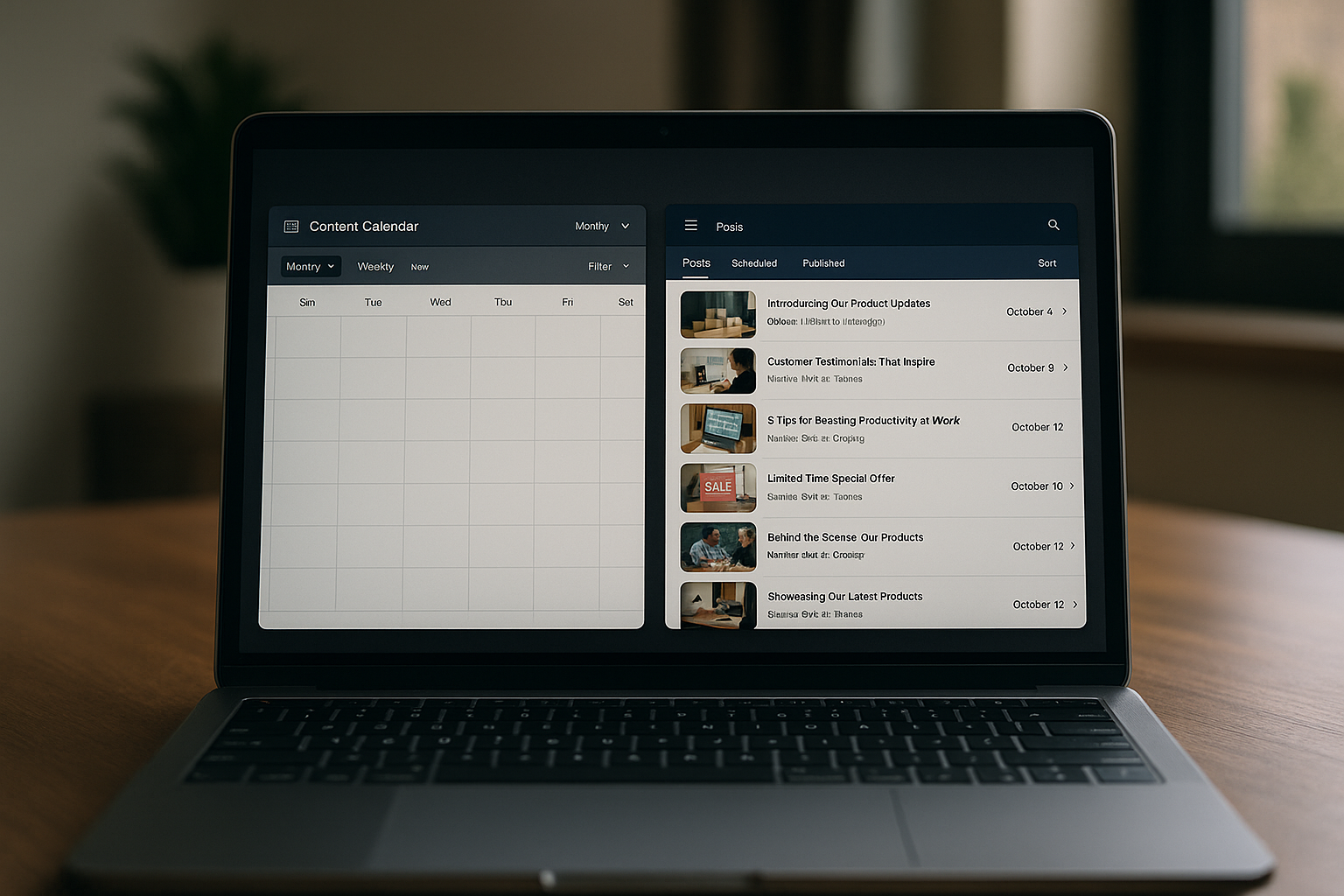
- Explains frankly which workflows are not ideal for My Post Factory.
- Clarifies the difference between a weekly system and one-post-at-a-time publishing.
- Highlights the best MPF use cases: reusable post types, recurring series and continuity.
My Post Factory is not built for fully handcrafted writing
Some people genuinely enjoy writing every text themselves, choosing every turn of phrase, refining every line and only publishing once everything feels entirely theirs. That way of working is valid, but it is not where My Post Factory fits best.
The product is designed to reduce the burden of regular production, not to replace the satisfaction of a highly manual author-style workflow. If the heart of your value is writing everything yourself, MPF may feel too system-oriented.
In that case, a lighter tool or even a simple drafting environment may suit you better.
It is also not ideal for managing posts one by one
My Post Factory creates the most value when there is continuity. It works much better with a recurring weekly structure, repeatable content patterns or a series of posts than with a stream of totally unrelated one-off pieces.
If your process treats every publication as a separate object with its own brief, writing, image and decision each time, you will not benefit fully from the logic of the product.
The best MPF use assumes at least some repeatable structure.
MPF is strongest when it can rely on recurring mechanics. It is much weaker when everything is handled as a unique case.
Highly manual batch work is not its natural ground
Some teams like sitting down once a month, opening a document, writing twenty posts by hand, tweaking each one and manually placing them in a calendar. If that ritual already works well, My Post Factory may simply not be necessary.
The product is better suited to a steady production flow than to a highly handcrafted batch process where every post remains an individual piece.
So if you actively enjoy that manual batch ritual, MPF may not match your natural operating style.
Pure spontaneity is not the main use case
My Post Factory is not primarily built for highly spontaneous publishing where a single post appears from an instant intuition and gets published almost immediately as an isolated piece.
The product is stronger when it can prepare, organise and sustain a rhythm. It can support an editorial line, a post sequence or a repeating structure. It is less relevant for entirely improvised one-by-one content creation.
If your style relies heavily on immediate reactions and singular spontaneous posts, that should be recognised upfront.
When My Post Factory becomes very relevant instead
The product becomes highly relevant when you want to install a weekly pattern. For example: one product post, one proof post, one expertise post, one lighter post and a rhythm that repeats without reinventing everything every time.
It is also well suited to reusable post types. A brand can define recurring structures, winning formats and content families, then keep them alive more easily.
Finally, MPF is especially useful for post series: launches, campaigns, educational sequences, offer breakdowns or recurring content around the same angle. That is where the system logic creates real value.
- A stable weekly structure
- Reusable post types
- Post series around one angle
- Continuous production instead of one-post-at-a-time improvisation
If you want a light editorial machine, MPF makes sense. If you want every post to remain an isolated creation, much less so.
The right choice depends on your natural way of working
The point is not to push everyone away, but to avoid a bad fit. A product can be good and still be wrong for certain working habits.
If you mainly want to preserve a highly handcrafted writing process, manage every publication as a unique object or work through heavy manual batches, My Post Factory should not be presented as an obvious answer.
But if you want regular cadence, reusable formats, post series and a presence that survives without heroic effort, then the product becomes much more coherent.
Choose MPF for the right reasons
My Post Factory is very good at installing cadence, recurring formats and post series. It is much less suited to a workflow where every post stays a totally isolated creation.