Comparison · Automation · Social media · My Post Factory — 6 min
Social media automation tools compared: why My Post Factory goes further
When people hear “social media automation”, they often think of classic schedulers: you write the post yourself, drop it into a calendar, and the tool simply presses “publish” for you. Useful, but it doesn’t fix the real problem: finding ideas, writing the copy, choosing visuals and keeping a consistent cadence. My Post Factory was built to go further: not just scheduling, but actually generating and publishing your content for you.
1) Classic schedulers: useful, but they stop at the calendar
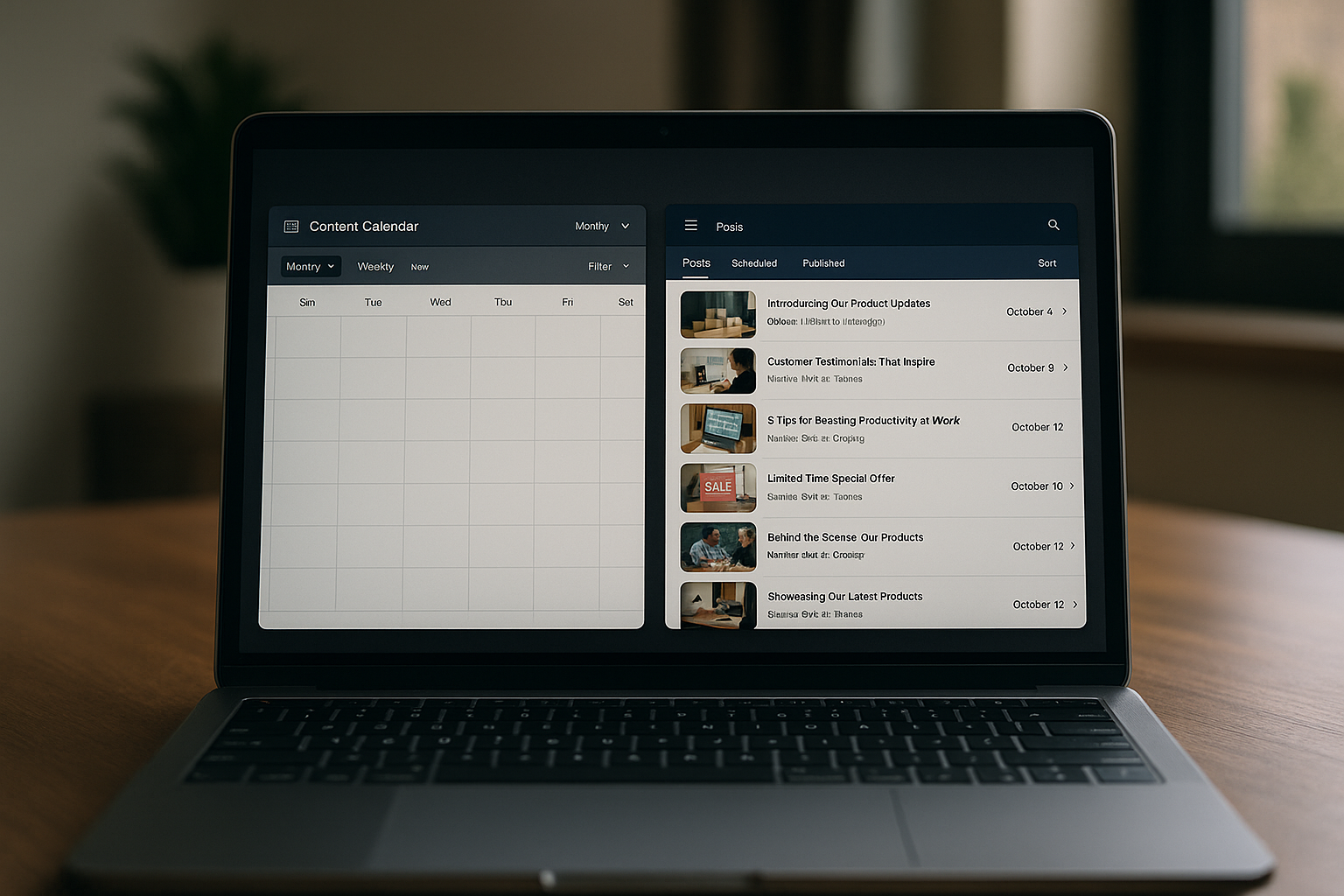
The first generation of social media tools behaves mostly like smart calendars. You connect your accounts, create your posts manually, then drag and drop them into a schedule. The tool fires them at the right time.
These platforms work well for teams that already have a strong content pipeline: writers, designers and a clear editorial strategy. But if you’re a small team, a founder, or a lean marketing crew, they don’t solve the main issue: producing the content itself.
In practice, you just swap one friction for another: instead of forgetting to post, you now have an empty calendar staring at you, waiting to be filled with posts you don’t have time to write.
Most tools act as publishing calendars. My Post Factory acts as a content factory.
2) Creative assistance tools: a step forward, but still very manual
A second category of tools offers creative assistance: AI writing helpers, caption templates, visual templates and so on. They speed up creation, but they still follow a one-post-one-manual-action logic.
You still have to pick the topic, write or edit the copy, generate or assemble the visual, and then send it to another tool for scheduling. Better than nothing, but still a lot of work if your goal is to keep multiple channels active.
These tools are great for marketers who want control over every single post. They’re less ideal if what you truly need is to put your social presence on autopilot while keeping your brand voice consistent.
Between bare calendars and creative helpers, one piece was missing: a system that runs the whole loop from idea to publication.
3) My Post Factory: from strategy to publication, on autopilot
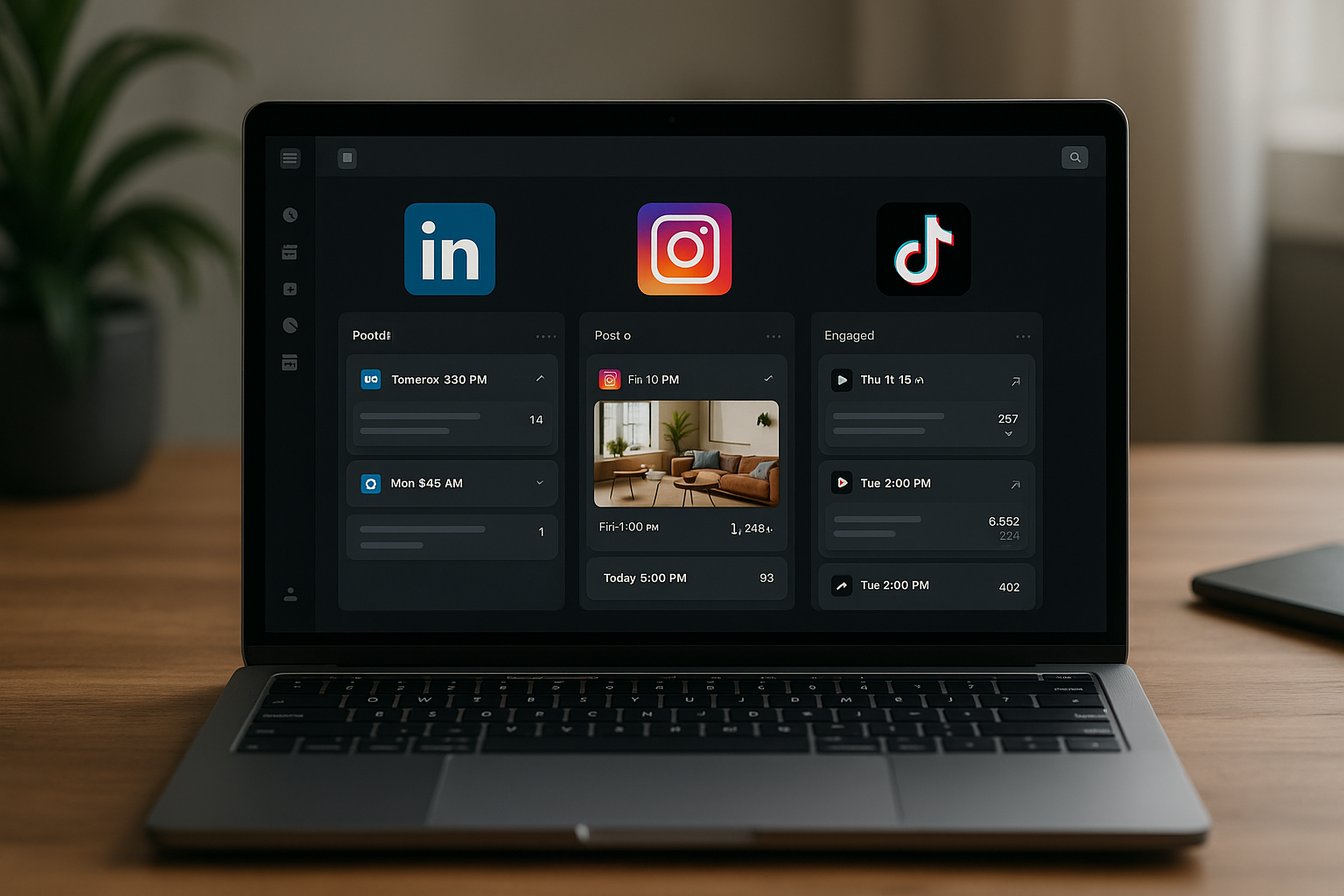
My Post Factory doesn’t just schedule posts. It generates the copy, the visuals and, when needed, the videos, then pushes them live to LinkedIn, Instagram and TikTok according to your rules. You define the strategy; the engine handles execution.
You start by describing your business, offers, audience, tone of voice, preferred formats (story, how-to, carousels, UGC-style videos, etc.) and your goals: visibility, leads, authority, hiring, or a mix of all. You can also use your website, offer pages, existing visuals, or editorial instructions as factual input.
From there, My Post Factory: - generates complete posts every day or at your chosen frequency, tailored to each platform; - adds images or videos generated from your assets or descriptions; - lets you choose between “review before posting” and full autopilot; - manages multiple projects, brands and client accounts from a single interface, which is especially useful for agencies.
You no longer stare at an empty calendar. You configure a system once and let it handle the repetitive work in the background.
Where other tools wait for you to feed them posts, My Post Factory actually manufactures those posts and ships them.
4) When to choose My Post Factory over a simple scheduler?
If you already have a fully staffed content team, an in-house studio and a calendar filled weeks in advance, a classic scheduler may be all you need. But that’s not the reality for most businesses.
My Post Factory is a better fit when: - you don’t have time to write and design every post yourself; - you want daily or weekly presence across several networks without burning out; - you already have pages, offers, or brand materials that are underused on social media; - you want to test many angles and formats without manually drafting everything.
In those cases, a scheduler will only organise the lack of content you already have. My Post Factory fixes the root problem by generating and publishing on your behalf, while respecting your brand and tone constraints.
A scheduler organises what you already have. My Post Factory creates what you don’t have time to produce.